LS Manual Transmission Options: A Comprehensive Guide
Exploring LS engine manual swaps involves understanding transmission compatibility, clutch choices, and necessary modifications. This guide details options like the T56, TK600, and NV3500,
along with crucial considerations for a successful conversion;
The LS engine family, renowned for its power and versatility, has become a favorite for swap projects, particularly when paired with a manual transmission. Originally equipped in a range of General Motors vehicles from 1997 onwards, LS engines offer a compelling blend of performance and affordability. However, these engines were frequently paired with automatic transmissions from the factory.

Consequently, swapping to a manual transmission requires careful planning and component selection. This involves choosing a compatible transmission, addressing wiring and ECU considerations, and ensuring proper mechanical fitment. The popularity of LS swaps has led to a thriving aftermarket, offering numerous solutions to simplify the process and maximize performance. Understanding the nuances of these systems is key to a successful conversion.
Popular LS Engine Families for Manual Swaps

Several LS engine families are particularly well-suited for manual transmission swaps, each offering unique characteristics. The LS1 (1997-2004) is a classic choice, known for its readily available parts and established aftermarket support. The LS2 (2005-2006) provides a noticeable power increase while maintaining similar compatibility with existing swap components.
For those seeking modern performance and efficiency, the LS3 (2008-2013) is an excellent option. These engines often feature improved cylinder heads and variable valve timing. Selecting the right LS engine depends on your budget, power goals, and desired level of complexity. Each variant presents slightly different challenges and benefits during the manual swap process.
LS1 (1997-2004) – The Classic Choice
The LS1 engine, produced from 1997 to 2004, remains a cornerstone for manual swap projects due to its affordability and widespread availability. Its 5.7L displacement delivers a robust power output, making it suitable for a variety of applications. A large aftermarket exists, providing ample support for upgrades and swap-specific components.
Compatibility with popular manual transmissions like the T56 is well-documented, simplifying the installation process. While not the most powerful LS variant, the LS1 offers an excellent balance of performance, cost, and ease of implementation, making it a favored choice for first-time swappers and budget-conscious builds.
LS2 (2005-2006) – More Power, Similar Compatibility
The LS2, manufactured from 2005-2006, builds upon the LS1 foundation, offering increased displacement (6.0L) and subsequently, more power. This makes it a desirable upgrade for those seeking enhanced performance without drastically altering the swap complexity. Fortunately, the LS2 largely retains the same mounting points and accessory drive configuration as the LS1.
This similarity translates to excellent compatibility with the same manual transmissions – notably the T56 – and utilizes similar bellhousing and adapter options. While typically found in GTOs and Trailblazer SS models, the LS2 presents a compelling option for enthusiasts prioritizing a noticeable power boost alongside relatively straightforward installation.
LS3 (2008-2013) – Modern Performance and Efficiency
The LS3, produced from 2008-2013, represents a further evolution of the LS engine family, boasting improved efficiency and even greater power output (typically 430 horsepower). Found in vehicles like the Chevrolet Camaro SS and Corvette, the LS3 offers a modern platform for manual swaps. Compatibility remains strong with the T56, though some modifications might be needed depending on the specific vehicle application.

Due to its later production date, the LS3 often incorporates updated sensors and potentially requires more sophisticated ECU tuning for optimal manual transmission operation. However, the gains in performance and fuel economy often justify the added complexity.
Compatible Manual Transmission Options
Several manual transmissions pair effectively with LS engines, each offering a unique balance of cost, durability, and performance. The T56 remains the most popular choice, renowned for its six-speed configuration and robust construction. Alternatives include the Tremec TK600, a five-speed known for its strength, and the NV3500, a budget-friendly option suitable for less demanding applications.
Selecting the right transmission depends heavily on the intended use of the vehicle. High-horsepower builds benefit from the T56 Magnum’s upgraded internals, while simpler swaps may find the NV3500 sufficient. Careful consideration of gear ratios is also crucial for optimal driving experience.
T56 (6-Speed) – The Go-To Performance Transmission
The T56 is widely considered the premier manual transmission for LS engine swaps, originating from applications like the Chevrolet Corvette and Camaro. Its six-speed configuration provides a broad gear ratio spread, enhancing both acceleration and highway cruising. Numerous versions exist, including those with different input shaft splines and bellhousing bolt patterns.
Its robust design handles significant power, making it suitable for modified LS engines. However, older T56 units may require rebuilding to ensure reliability. Finding a compatible bellhousing is essential, and modifications to the transmission tunnel may be necessary for proper fitment in some vehicles.

T56 Magnum – An Upgraded T56 Option
The T56 Magnum represents a significant improvement over the original T56, addressing common weaknesses and increasing strength. Developed by Tremec, it features stronger internal components, including upgraded gears and shafts, capable of handling higher horsepower and torque levels. It’s a popular choice for LS swaps aiming for substantial performance gains.
The Magnum typically utilizes a 26-spline input shaft, requiring a compatible clutch disc. It also boasts a revised case design for improved rigidity. While more expensive than a standard T56, the increased durability and performance often justify the cost for demanding applications, ensuring a reliable and enjoyable driving experience.
Tremec TK600 (5-Speed) – Robust and Reliable
The Tremec TK600 is a highly regarded 5-speed manual transmission known for its exceptional strength and durability. Designed as a direct replacement for the T10 and Borg-Warner T5, it offers a substantial upgrade in terms of gear quality and overall robustness. It’s an excellent choice for LS engine swaps where reliability is paramount, particularly in high-horsepower applications.
Featuring a wider gear ratio spread than many other options, the TK600 provides both strong acceleration and comfortable highway cruising. Its robust construction and readily available parts support make it a dependable long-term solution for manual conversions, offering a smooth and precise shifting experience.
NV3500 (5-Speed) – Budget-Friendly and Durable

The NV3500 is a popular choice for LS engine swaps seeking a cost-effective yet durable manual transmission option. Originally found in various GM trucks and SUVs, it’s known for its robust construction and ability to handle moderate horsepower levels reliably. While not as refined as some higher-end transmissions, it provides a solid and dependable shifting experience.
Its affordability makes it attractive for budget-conscious builds, and readily available parts ensure ease of maintenance and repair. The NV3500 is a practical solution for those prioritizing functionality and durability over ultimate performance, offering a straightforward manual conversion path.
Considerations for Clutch Selection
Choosing the right clutch is paramount for a successful LS manual swap, directly impacting drivability and longevity. The primary decision revolves around single versus twin-disc setups. Single-disc clutches are generally sufficient for street applications and moderate power levels, offering a balance of cost and performance. Twin-disc clutches, however, provide superior clamping force, ideal for high-horsepower builds and aggressive driving.
Flywheel compatibility and weight are also crucial. Matching the flywheel to the chosen clutch ensures proper operation, while weight influences engine responsiveness and inertia. Careful consideration of these factors guarantees a smooth and reliable power transfer.
Clutch Type: Single Disc vs. Twin Disc
The choice between a single and twin-disc clutch hinges on intended use and power output. Single-disc clutches are cost-effective and suitable for street cars and moderate horsepower applications, providing adequate clamping force for daily driving. They offer a simpler design and easier installation process.
Twin-disc clutches, conversely, excel in high-performance scenarios. Their dual clamping surfaces dramatically increase grip, preventing slippage under extreme loads. This makes them essential for heavily modified LS engines and track-focused builds. However, twin-discs are more expensive and can require more precise adjustments for optimal engagement.
Flywheel Compatibility and Weight
Flywheel selection is critical for a successful LS manual swap, demanding careful attention to compatibility and weight. The flywheel must match the chosen crankshaft flange pattern – typically GM or Ford, depending on the transmission. Incorrect matching prevents proper mounting and can lead to catastrophic failure.
Flywheel weight influences engine characteristics. Lighter flywheels enhance acceleration and responsiveness, but can make the engine stall more easily at low speeds. Heavier flywheels offer smoother operation and improved low-end torque, ideal for street driving. Consider your driving style and engine modifications when determining the optimal flywheel weight for your LS build.
Bellhousing and Adapter Plates
Selecting the correct bellhousing is paramount for a secure and aligned LS manual transmission installation. For GM transmissions like the T56, a standard LS bellhousing typically suffices; However, when utilizing non-GM transmissions, adapter plates become essential to bridge the mounting differences between the engine and transmission.
Adapter plates ensure proper alignment and sealing, preventing vibration and oil leaks. They vary in construction and price, so choose a reputable brand known for precision machining. Careful consideration of pilot bearing/bushing compatibility and clutch linkage requirements is vital when using adapter plates for a smooth and reliable swap.
Choosing the Right Bellhousing for Your Setup
The bellhousing’s selection hinges on the transmission chosen and the engine’s specific configuration. For a direct fit with a T56, a standard LS bellhousing designed for that transmission is ideal. However, factors like engine generation (LS1, LS2, LS3) and accessory bracket compatibility must be verified.
Consider bellhousing material – steel is common, while aluminum offers weight savings. Ensure the bellhousing accommodates the desired starter location and clutch linkage. Inspect the bellhousing for any damage or imperfections before installation. Proper fitment is crucial for preventing vibrations and ensuring long-term reliability of the drivetrain.
Adapter Plate Requirements for Non-GM Transmissions
When pairing an LS engine with a non-GM manual transmission, an adapter plate becomes essential. These plates bridge the dimensional differences between the LS engine’s bellhousing pattern and the transmission’s input shaft flange. Careful selection is vital, considering bolt patterns, crankshaft pilot diameter, and input shaft spline count.
Adapter plates often require specific pilot bearings and clutch setups. Ensure the chosen plate supports the desired clutch type (single or twin disc). Thoroughly research compatibility and potential clearance issues before purchasing. Quality adapter plates are typically made from billet aluminum or steel for durability and precise alignment.
Driveshaft Modifications and Considerations
A successful LS manual swap frequently necessitates driveshaft adjustments. The original driveshaft length may not align with the new transmission’s output shaft location, requiring shortening or lengthening. U-joint compatibility is also critical; ensure the LS engine and transmission yokes match the driveshaft’s U-joints, or replacement is needed.
Driveshaft speed and angle must be considered to avoid vibrations. A properly balanced driveshaft is essential for smooth operation. Depending on the vehicle and transmission, a custom driveshaft may be the most reliable solution, ensuring correct length, balance, and U-joint compatibility for optimal performance.

Driveshaft Length and U-Joint Compatibility
Accurate driveshaft length is paramount after an LS manual swap. The transmission’s position relative to the differential dictates the required length; measurements must be precise to avoid binding or excessive play. Incorrect length can cause vibrations and premature wear on components.
U-joint compatibility involves matching the yoke styles between the transmission, driveshaft, and differential. Different LS engines and transmissions utilize various yoke designs. Ensuring proper fitment prevents premature failure and maintains driveline integrity. Upgrading to heavy-duty U-joints is advisable for high-horsepower applications.
Wiring and ECU Considerations for Manual Swaps
LS manual swaps necessitate careful attention to wiring and Engine Control Unit (ECU) programming. Automatic transmission controls must be disabled to prevent conflicts and error codes. This often involves repinning connectors and modifying the ECU calibration.
Tuning the ECU for manual operation is crucial for optimal performance and driveability. The ECU needs to recognize the lack of an automatic transmission and adjust parameters accordingly. This includes removing torque management features and calibrating for the manual transmission’s gear ratios. Proper tuning ensures smooth shifting and maximizes engine output.

Disabling Automatic Transmission Controls
Successfully disabling automatic transmission controls is paramount during an LS manual swap. The ECU constantly monitors signals from the automatic transmission; these must be addressed to avoid diagnostic trouble codes (DTCs). This typically involves physically disconnecting or repinning wires related to the transmission control module (TCM).
Software modifications are also essential. The ECU calibration needs to be altered to remove any routines expecting automatic transmission input. Failing to do so will result in persistent error messages and potentially limit engine performance. Proper disabling ensures the ECU operates correctly with the manual setup.
Tuning the ECU for Manual Operation
ECU tuning is critical after a manual swap to optimize performance and ensure proper operation. Removing automatic transmission references is only the first step; the tune must be adjusted for the manual transmission’s characteristics. This includes modifying torque management settings, adjusting the throttle response, and recalibrating the speedometer for accurate readings.
A custom tune, often performed by a specialist, is highly recommended. It allows for precise control over engine parameters, maximizing power and driveability. Proper tuning also ensures the engine operates within safe limits, preventing damage and enhancing long-term reliability. Data logging and dyno testing are valuable tools during this process.
Common Challenges and Solutions in LS Manual Swaps
LS manual swaps, while rewarding, often present hurdles. Pedal assembly installation can be tricky, requiring fabrication or adapter brackets for proper placement and feel. Shifter placement demands careful consideration of ergonomics and cable routing to ensure smooth, precise gear changes. Driveshaft clearance can also be an issue, necessitating modifications or a custom driveshaft.
Wiring can be complex, demanding careful attention to detail when disabling automatic transmission controls. Bellhousing alignment is crucial to prevent vibrations and premature wear. Addressing these challenges proactively with research and quality components ensures a successful and enjoyable swap.
Pedal Assembly and Master Cylinder Installation
Proper pedal assembly installation is fundamental for a functional LS manual swap. Many vehicles require aftermarket pedal assemblies designed for LS conversions, as factory setups are often incompatible. Careful attention must be paid to pedal height and angle for comfortable operation. Master cylinder selection is equally critical; choose one sized appropriately for the transmission and desired pedal feel.
Mounting the master cylinder securely and ensuring proper hydraulic line routing are essential to prevent leaks and maintain consistent clutch engagement. Bleeding the system thoroughly is vital to eliminate air bubbles and achieve optimal performance.
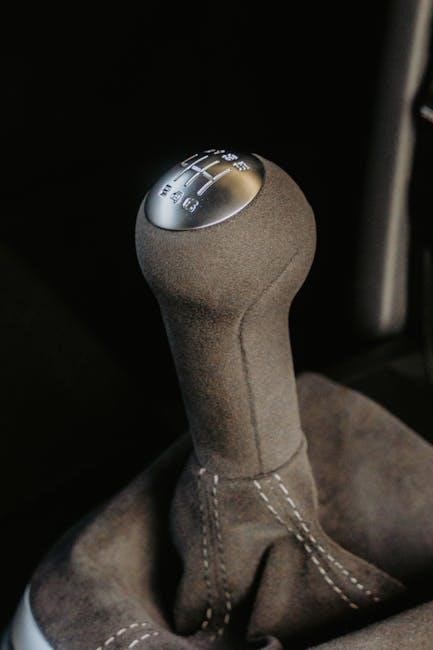
Shifter Placement and Cable Routing
Strategic shifter placement is crucial for a comfortable and precise driving experience during an LS manual swap. Consider the driver’s seating position and desired reach when selecting a shifter location. Cable-operated shifters require careful routing to avoid binding or interference with other components.
Ensure cables have sufficient slack for transmission movement and suspension travel. Secure the cables properly to prevent rattling or disconnections. Direct-linkage shifters demand precise alignment for smooth operation. Proper adjustment is key to achieving accurate gear selection and a positive feel.