Postural assessment, or postural analysis, is an observational evaluation often used to analyze a person’s static posture and alignment.
This assessment helps understand potential imbalances and risks, forming a basis for corrective strategies and injury prevention plans.
What is a Postural Assessment?
A postural assessment is a systematic process of evaluating an individual’s body alignment in both static (standing) and dynamic (moving) positions. It’s a crucial component of many healthcare disciplines, including physical therapy, chiropractic, and athletic training.

The assessment involves observing the body from various views – anterior, posterior, and lateral – to identify deviations from optimal alignment. These deviations can indicate muscle imbalances, joint restrictions, or neurological issues.
Essentially, it’s a detailed observation, often utilizing tools like plumb lines or specialized apps, to pinpoint areas of postural dysfunction. The goal is to understand how the body is positioned and functioning, laying the groundwork for targeted interventions.
Importance of Postural Assessment in Healthcare
Postural assessment plays a vital role in healthcare by providing insights into a patient’s overall musculoskeletal health and function. Identifying postural imbalances early can help prevent the development of chronic pain and injuries.
It aids in diagnosing underlying conditions contributing to poor posture, such as muscle weakness, neurological deficits, or structural abnormalities. Furthermore, it informs the creation of personalized treatment plans, including corrective exercises and manual therapy.
Understanding posture’s impact on biomechanics is crucial for optimizing movement patterns and reducing stress on joints, ultimately enhancing a patient’s quality of life and athletic performance.
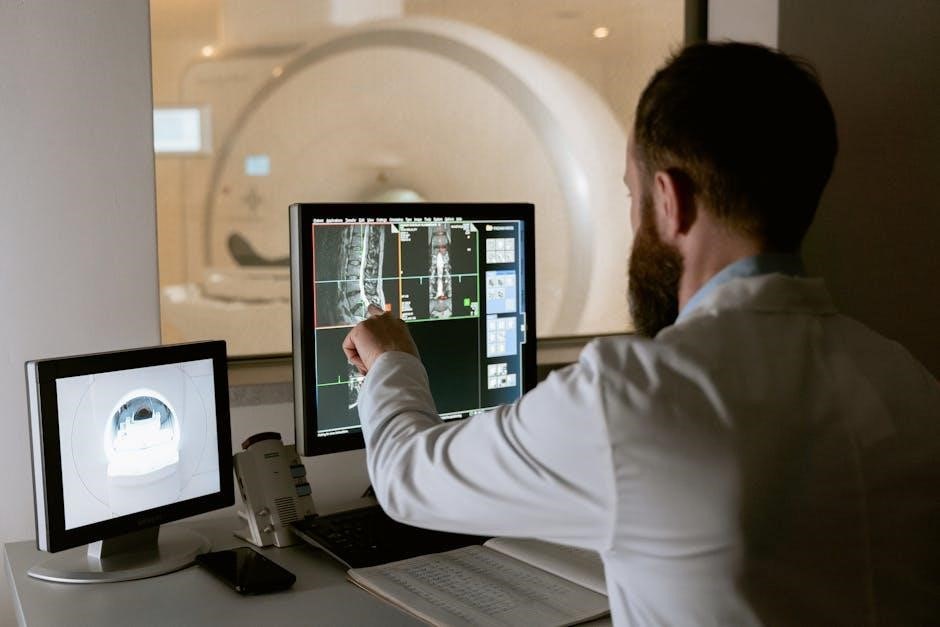
Static Postural Assessment
Static postural assessment involves observing the body’s alignment while stationary, typically in a relaxed, standing position, to identify deviations from optimal alignment.
Visual Assessment Techniques
Visual assessment forms the cornerstone of static postural analysis, relying on a trained observer’s eye to detect imbalances. This technique involves observing the patient from multiple views – anterior, posterior, and lateral – noting any asymmetries or deviations from anatomical norms.
Key observations include shoulder height, spinal curves, pelvic tilt, knee alignment, and foot pronation/supination. Careful attention is paid to landmarks like the head position relative to the shoulders, and the alignment of the hips and knees.
While subjective, a skilled practitioner can gain valuable insights into postural distortions using this initial, non-invasive method, guiding further, more objective assessments.
Plumb Line Assessment
The plumb line assessment is a fundamental technique used to evaluate postural alignment against gravity’s vertical line. A plumb line is suspended from specific anatomical landmarks – typically the earlobe or acromion process – to assess deviations.
Ideally, the plumb line should pass through the center of gravity, bisecting the body into symmetrical halves. Any lateral deviation indicates a postural imbalance. This method helps visualize how body segments are positioned relative to the gravitational force.
It’s a simple yet effective way to identify forward head posture, lateral spinal curves, and pelvic shifts, providing a clear visual representation of postural distortions.
Landmark Identification for Static Analysis
Static postural analysis relies on identifying key anatomical landmarks to assess alignment. These include the ears, shoulders, hips, knees, and ankles, observed from anterior, posterior, and lateral views.
Specific points like the acromion, greater trochanter, and medial malleolus are crucial for evaluating symmetry and deviations. Observing the relationship between these landmarks reveals imbalances.
For example, uneven shoulder height or hip levels indicate postural distortions. Accurate landmark identification is vital for a reliable assessment, forming the foundation for targeted interventions and corrective exercises.

Dynamic Postural Assessment
Dynamic assessment evaluates posture during movement, observing how the body functions through activities like walking and functional tasks.
This reveals imbalances not apparent in static positions.
Gait Analysis
Gait analysis, a crucial component of dynamic postural assessment, involves a systematic observation of a person’s walking pattern. This detailed evaluation extends beyond simply noting if someone walks normally; it examines various parameters like step length, stride, cadence, and the angle of the foot during different phases of the gait cycle.
Observing deviations – such as asymmetrical arm swing, altered pelvic rotation, or inefficient weight transfer – can reveal underlying postural imbalances or musculoskeletal issues. Analyzing gait provides valuable insights into how postural deficiencies impact functional movement and potentially contribute to injury risk. It’s a powerful tool for identifying compensations and developing targeted interventions.
Functional Movement Screening
Functional Movement Screening (FMS) is a dynamic postural assessment technique utilizing a series of movements to identify limitations and asymmetries. These movements assess fundamental movement patterns – such as squatting, lunging, and overhead reaching – revealing restrictions in mobility, stability, and motor control.
The FMS doesn’t diagnose specific conditions but highlights areas where movement quality is compromised. Scoring systems quantify movement deficiencies, providing a baseline for tracking progress with corrective exercises. Identifying these limitations allows clinicians to proactively address potential injury risks and optimize movement efficiency, ultimately improving overall postural control and functional performance.
Observation During Activities
Observing a patient during functional activities provides invaluable dynamic postural insights beyond static assessment. This involves watching how posture changes during everyday tasks like walking, lifting, or even sitting and reaching. Subtle deviations – like altered gait patterns or compensatory movements – become apparent.
Analyzing these movements reveals how postural imbalances impact real-world function. For example, observing a forward head posture during computer use or trunk sway during walking. This contextual understanding is crucial for developing targeted interventions. It helps tailor corrective exercises to address specific functional limitations and improve movement patterns in daily life.

Key Postural Deviations Identified

Common deviations include forward head posture, kyphosis, lordosis, and scoliosis; these imbalances can increase injury risk and affect overall biomechanics.
Forward Head Posture
Forward Head Posture (FHP) is a common postural distortion where the head protrudes anteriorly relative to the shoulders. This misalignment significantly alters biomechanics, increasing stress on cervical spine structures and potentially leading to headaches, neck pain, and upper back discomfort.
During postural assessment, FHP is identified by observing a forward translation of the head, often accompanied by rounded shoulders and a flattened cervical curve. It’s frequently linked to prolonged screen time, poor workstation ergonomics, and muscle imbalances – specifically, tight pectoral muscles and weak deep neck flexors. Corrective strategies focus on strengthening the posterior neck muscles and stretching the anterior chest muscles to restore optimal head and neck alignment.
Kyphosis and Lordosis
Kyphosis and Lordosis represent deviations in the natural spinal curves. Kyphosis, an excessive outward curvature of the thoracic spine, often presents as a rounded upper back or “hunchback.” Conversely, Lordosis signifies an exaggerated inward curvature, commonly observed in the lumbar spine, creating an increased lower back swayback.
Postural assessment reveals kyphosis through visual observation of a rounded upper back and potentially shoulder protraction. Lordosis is identified by an excessive lumbar curve and anterior pelvic tilt. These imbalances can stem from muscle imbalances, poor posture habits, or underlying structural issues. Corrective exercises aim to strengthen core muscles, improve spinal alignment, and restore a balanced curvature.
Scoliosis – Detection and Initial Assessment
Scoliosis, a lateral curvature of the spine, requires careful detection during a postural assessment. Initial screening involves visual observation from posterior, anterior, and lateral views, looking for asymmetry in shoulder height, scapular position, rib prominence, and waist angles. A forward bend test (Adam’s test) helps reveal rib humps indicative of spinal rotation.
While a postural assessment can suggest scoliosis, it doesn’t diagnose it. Referral to a medical professional for radiographic imaging (X-rays) is crucial for confirmation and determining the Cobb angle – a measurement of the curve’s severity. Early detection allows for timely intervention and management strategies.

Tools and Technologies Used
Various tools aid postural assessment, including postural grids and apps for analysis. Surface electromyography (sEMG) assesses muscle activity, while photographic/videographic methods document changes.
Postural Grids and Apps
Postural grids offer a visual reference for assessing body alignment, helping identify deviations from the ideal plumb line. These grids, often used during static assessments, provide a framework for observing shoulder height, spinal curves, and pelvic tilt.
Modern technology has introduced numerous apps designed to aid in postural assessment. These applications utilize a smartphone’s camera and sensors to analyze body angles and provide feedback on postural imbalances. Some apps offer features like automated landmark detection and data storage for tracking progress over time.
While convenient, it’s crucial to remember that app-based assessments should complement, not replace, a thorough clinical evaluation performed by a qualified healthcare professional. They serve as valuable tools for initial screening and monitoring, but professional expertise is essential for accurate diagnosis and treatment planning.
Surface Electromyography (sEMG) in Postural Analysis
Surface Electromyography (sEMG) is a valuable tool for objective postural analysis, measuring the electrical activity produced by muscles. By placing electrodes on specific muscle groups, sEMG can reveal patterns of muscle activation during static postures and dynamic movements.
This data helps identify muscle imbalances – where some muscles are overactive while others are weak – contributing to postural deviations. sEMG can pinpoint muscles responsible for maintaining or disrupting proper alignment, offering insights beyond visual assessment alone.
Analyzing sEMG data alongside visual observations provides a comprehensive understanding of postural control. It aids in developing targeted corrective exercise programs to restore optimal muscle function and improve postural stability, ultimately reducing injury risk.
Photographic and Videographic Analysis
Photographic and videographic analysis offer a cost-effective and readily accessible method for documenting and evaluating postural deviations. Taking standardized photographs from anterior, posterior, and lateral views provides a visual record of a client’s posture.
Videographic analysis, particularly during dynamic movements like gait, allows for a more detailed assessment of movement patterns and postural control. Software tools can aid in measuring angles and tracking joint movements, enhancing objectivity.
These visual records are invaluable for tracking progress over time and communicating findings to clients. They also serve as crucial components of a comprehensive postural assessment PDF report, providing clear evidence of postural imbalances.

Creating a Postural Assessment PDF Report
A comprehensive postural assessment PDF report consolidates findings, including visual documentation, data interpretation, and personalized corrective exercise recommendations for long-term management.
Essential Components of a PDF Report
A robust postural assessment PDF report requires several key elements for clarity and effective communication. Firstly, detailed client information – demographics, health history, and presenting complaints – establishes context. Secondly, a clear description of the assessment process, including techniques used (visual, plumb line, etc.), is crucial.
Photographic documentation, both anterior, posterior, and lateral views, provides visual evidence of postural deviations. Quantitative data, such as landmark measurements and range of motion assessments, adds objectivity.
Importantly, the report must include a thorough interpretation of the findings, linking observed deviations to potential biomechanical imbalances and injury risks. Finally, a personalized corrective exercise program, tailored to address identified issues, completes the report, offering a pathway to improved posture and function.
Data Presentation and Interpretation
Effective postural assessment PDF reports prioritize clear data presentation. Utilize tables and charts to summarize landmark measurements, range of motion findings, and sEMG results (if applicable). Visual aids, like annotated photographs highlighting postural deviations, enhance understanding.
Interpretation should move beyond simply listing observations; explain the biomechanical implications of each finding. For example, a forward head posture might correlate with upper crossed syndrome and increased neck pain risk.
Connect observed postural imbalances to the client’s reported symptoms and functional limitations. A well-interpreted report translates raw data into actionable insights, guiding the development of a targeted corrective exercise plan.
Example PDF Report Structure
A comprehensive postural assessment PDF report typically begins with client demographics and a brief overview of the assessment’s purpose. Follow this with a detailed description of the static and dynamic assessment procedures used.
Present findings systematically: visual observations, plumb line deviations, landmark measurements, and gait analysis results. Include supporting images.
A dedicated ‘Interpretation of Findings’ section connects observations to potential biomechanical issues and functional limitations. Conclude with specific, individualized recommendations for corrective exercises and long-term postural management strategies. Append any raw data or sEMG reports as needed.

Postural Assessment and Injury Prevention
Postural assessments identify deviations linked to increased injury risk, particularly in athletes; a detailed PDF report aids in developing targeted corrective exercise programs.
Correlation Between Posture and Injury Risk
Postural deviations, identified through comprehensive postural assessments and documented within a detailed PDF report, demonstrate a strong correlation with increased injury susceptibility. For example, junior soccer players already exhibiting postural imbalances face heightened risks.
These imbalances create mechanical disadvantages, predisposing individuals to strains, sprains, and chronic pain. A PDF report outlining these findings allows healthcare professionals to clearly communicate these risks to patients and stakeholders.
Specifically, forward head posture, kyphosis, lordosis, and scoliosis can alter biomechanics, increasing stress on joints, muscles, and ligaments. Therefore, a thorough postural assessment, culminating in a comprehensive PDF, is crucial for proactive injury prevention strategies.
Developing Corrective Exercise Programs
Following a detailed postural assessment, documented in a comprehensive PDF report, targeted corrective exercise programs can be developed. These programs address identified postural imbalances and aim to restore optimal biomechanics.
The PDF report serves as a blueprint, outlining specific exercises focusing on strengthening weak muscles, lengthening tight muscles, and improving proprioception. Programs should be individualized, considering the patient’s specific needs and limitations.
Effective programs often incorporate exercises to improve core stability, scapular control, and hip mobility. Regular monitoring and adjustments, informed by ongoing postural assessments and updated PDF documentation, are essential for long-term success.
Long-Term Postural Management
Long-term postural management extends beyond corrective exercises, requiring sustained effort and lifestyle modifications detailed within the postural assessment PDF. Consistent self-awareness and proactive habits are crucial for maintaining improvements.
The PDF report should outline strategies for ergonomic adjustments at work and home, promoting proper body mechanics during daily activities. Regular follow-up postural assessments, documented in updated PDFs, are vital to monitor progress and address any regressions.
Education on self-correction techniques and preventative measures empowers individuals to take ownership of their postural health, ensuring lasting benefits and minimizing future injury risk.